

Semaglutide
Price range: $49.00 through $147.00
Cagrilintide
Price range: $154.00 through $308.00
Hot
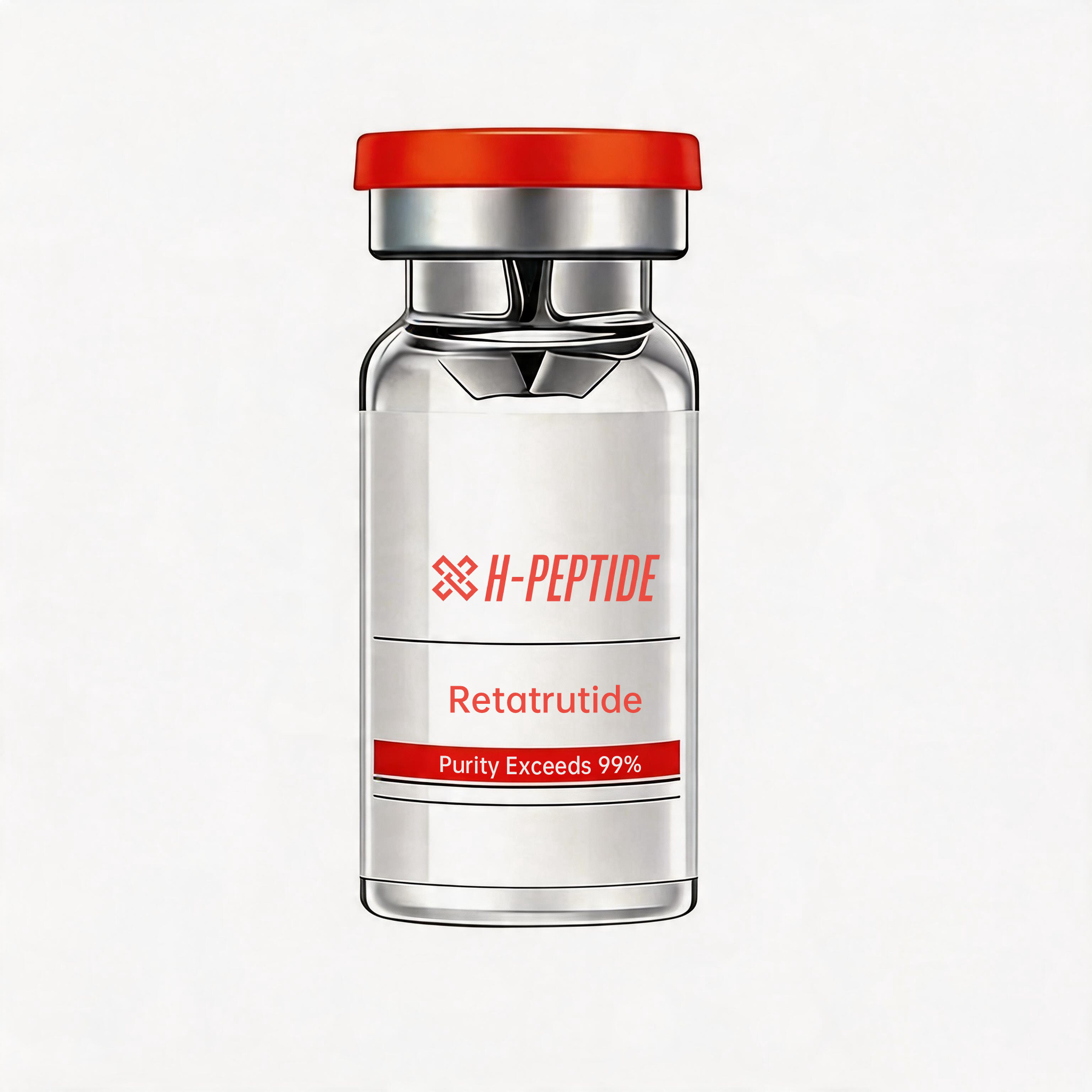
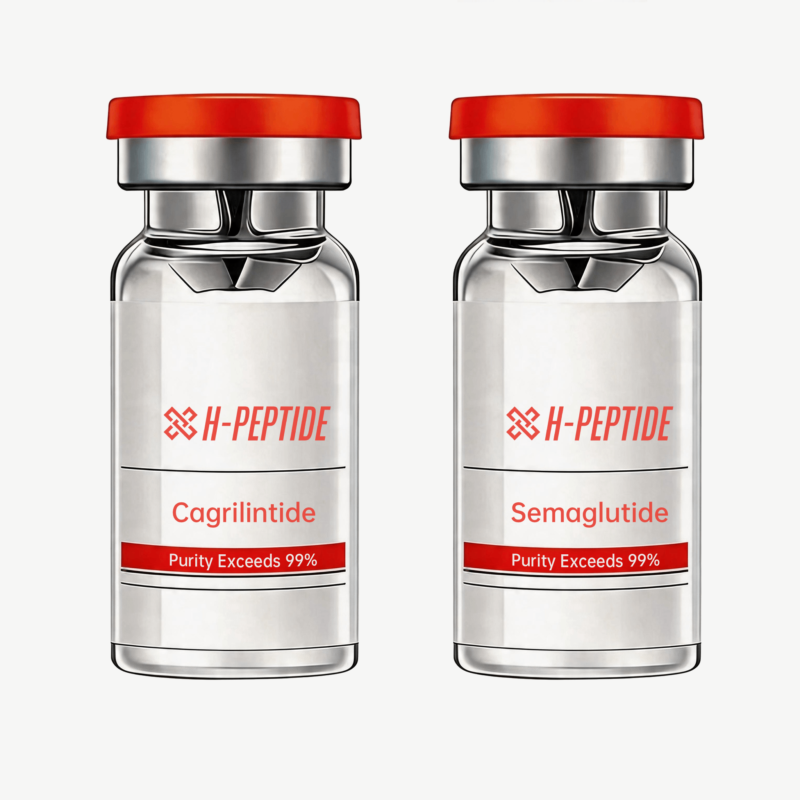
$70.00 – $476.00Price range: $70.00 through $476.00
With extensive experience in compound synthesis, we can provide rapid custom synthesis services for this product according to your research needs.
Questions
Retatrutide Common Questions
What’s pIC50?
Half-maximal inhibitory concentration (IC50) refers to the concentration of the inhibitor which is required to inhibit a given biological or biochemical function by half.
What’s Kd?
nhibitory consent (Ki) reflects the strength of inhibitor binding to the target, corresponding to the concentration of free inhibitor when 50% of the target is bound by the inhibitor.
Description
Targets & IC50
GIPR:0.0643 nM (EC50, human), GIPR:0.057 nM (Ki, human), GLP1 receptor:0.794 nM (EC50, mouse), GIPR:2.8 nM (Ki, mouse), GCGR:5.79 nM (EC50, human), GCGR:2.32 nM (EC50, mouse), GCGR:73 nM (Ki, mouse), GLP1 receptor:7.2 nM (Ki, human), GIPR:0.191 nM (EC50, mouse), GLP1 receptor:1.3 nM (Ki, mouse), GCGR:5.6 nM (Ki, human), GLP1 receptor:0.775 nM (EC50, human)
In vitro
Retatrutide (LY3437943) exhibits activity against human GCGR, GIPR, and GLP-1R with EC50 values of 5.79, 0.0643, and 0.775 nM, respectively[1].
For mouse GCGR, GIPR, and GLP-1R, Retatrutide shows activity with EC50 values of 2.32, 0.191, and 0.794 nM, respectively[1].
In terms of binding affinity, Retatrutide has Ki values of 5.6, 0.057, and 7.2 nM for human GCGR, GIPR, and GLP-1R, respectively[1].
Similarly, for mouse GCGR, GIPR, and GLP-1R, Retatrutide exhibits binding affinity with Ki values of 73, 2.8, and 1.3 nM, respectively[1].
In vitro
In vivo, Retatrutide (LY3437943) engages with GCGR and, when administered through subcutaneous injection at a single dose of 0.47 mg/kg, improves glucose tolerance in an ipGTT (intraperitoneal glucose tolerance test) through activation of GIP or GLP-1 receptors[1].
With subcutaneous injections at 10 mL/kg every 3 days in a cycle sustained for 21 days, Retatrutide leads to significant weight reduction and increased energy expenditure through activation of glucagon receptor[1].
Synonyms
LY3437943
Molecular Weight
4732.09
Formula
C221H342N46O68
Cas No.
2381089-83-2
Smiles
CC[C@H](C)C(C(=O)N[C@@H](CCC(=O)O)C(=O)N[C@@H](CC1=CC=C(C=C1)O)C(=O)N[C@@H](CC(C)C)C(=O)N[C@@H](CC(C)C)C(=O)N[C@@H](CCC(=O)O)C(=O)NCC(=O)NCC(=O)N2CCC[C@H]2C(=O)N[C@@H](CO)C(=O)N[C@@H](CO)C(=O)NCC(=O)N[C@@H](C)C(=O)N3CCC[C@H]3C(=O)N4CCC[C@H]4C(=O)N5CCC[C@H]5C(=O)N[C@@H](CO)C(=O)N)NC(=O)[C@H](CC6=CC=CC=C6)NC(=O)[C@H](C)NC(=O)C(C)(C)NC(=O)[C@H](CCC(=O)N)NC(=O)[C@H](C)NC(=O)[C@H](CCCCNC(=O)COCCOCCNC(=O)CC[C@@H](C(=O)O)NC(=O)CCCCCCCCCCCCCCCCCCC(=O)O)NC(=O)[C@H](CCCCN)NC(=O)[C@H](CC(=O)O)NC(=O)[C@H](CC(C)C)NC(=O)[C@@](C)(CC(C)C)NC(=O)C([C@@H](C)CC)NC(=O)[C@H](CO)NC(=O)[C@H](CC7=CC=C(C=C7)O)NC(=O)[C@H](CC(=O)O)NC(=O)[C@H](CO)NC(=O)[C@H]([C@@H](C)O)NC(=O)[C@H](CC8=CC=CC=C8)NC(=O)[C@H]([C@@H](C)O)NC(=O)CNC(=O)[C@H](CCC(=O)N)NC(=O)C(C)(C)NC(=O)[C@H](CC9=CC=C(C=C9)O)N
Relative Density.
no data available
Sequence
Tyr-{Aib}-Gln-Gly-Thr-Phe-Thr-Ser-Asp-Tyr-Ser-Ile-{α-Me-Leu}-Leu-Asp-Lys-{diacid-C20-gamma-Glu-(AEEA)-Lys}-Ala-Gln-{Aib}-Ala-Phe-Ile-Glu-Tyr-Leu-Leu-Glu-Gly-Gly-Pro-Ser-Ser-Gly-Ala-Pro-Pro-Pro-Ser-NH2
Storage
Formula
Solution Preparation Table
DMSO
|
1mg |
5mg |
|||
|---|---|---|---|---|
|
1 mM |
0.2113 mL |
1.0566 mL |
2.1132 mL |
10.5662 mL |
|
5 mM |
0.0423 mL |
0.2113 mL |
0.4226 mL |
2.1132 mL |
Note : The dilution table applies only to solid products. For liquid products, please calculate the stock solution based on the stated concentration and/or density.
No account yet?
Create an Account